
Guides · Micro-Scale LEGO Techniques for Starship Builders
Mini Scale, Major Fun
Mini- and micro-scale builds compress recognizable hero ships into a few dozen to a few hundred pieces. The trick is choosing techniques that read as detail without adding part count and knowing when a detail that seems important actually disrupt the design. I want to encourage you to build your own MOCs digitally or with pieces from your collection! Here are four techniques that matter most:
1. SNOT (Studs Not On Top)
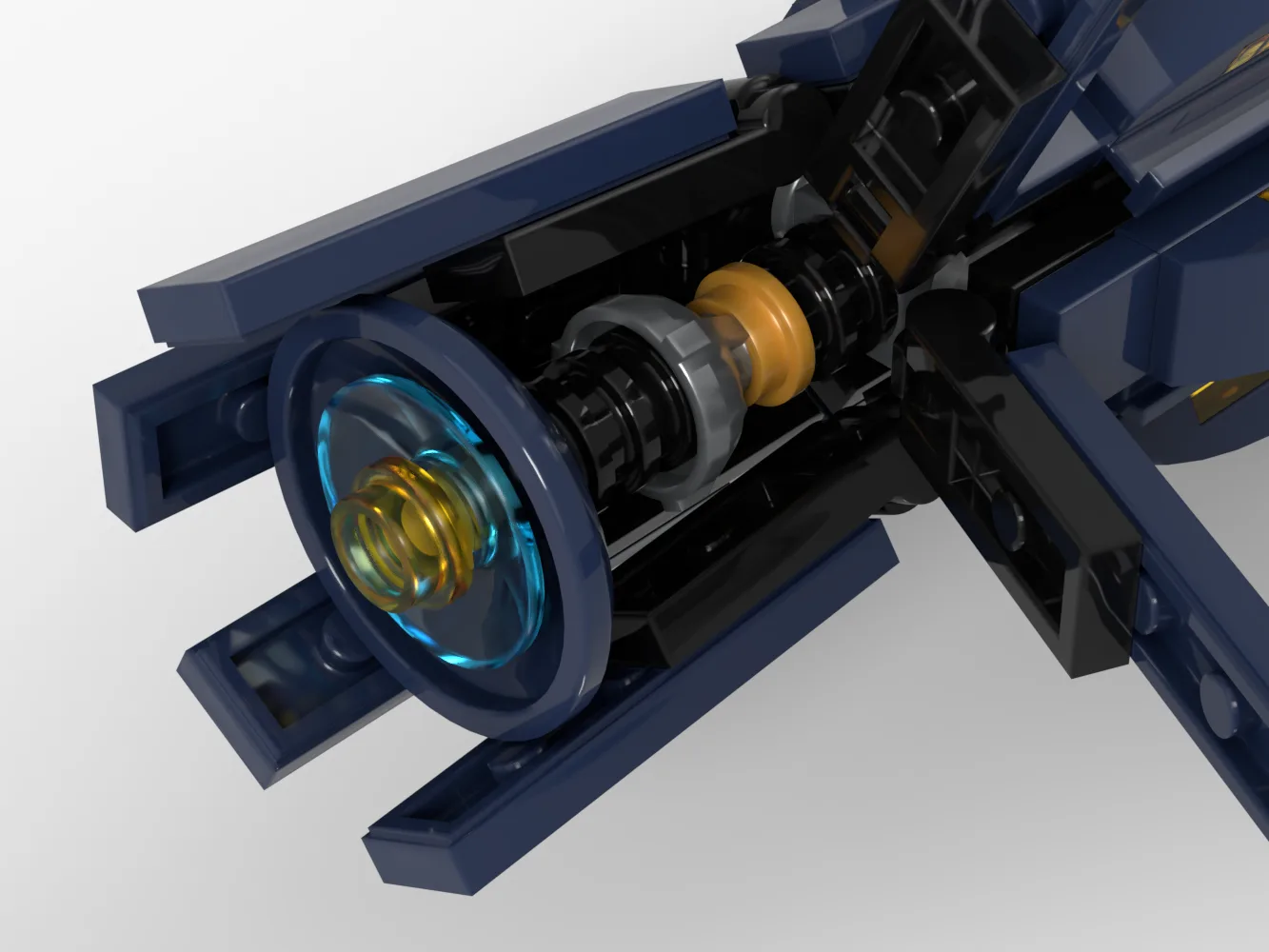
SNOT building rotates plates and tiles 90° using brackets, headlight bricks, and SNOT bricks (bricks where studs are on one, multiple, or all sides of a brick). At mini-scale this is essential: a sideways tile becomes a phaser strip, an inverted slope becomes a saucer strut. At this scale, flipping stud direction becomes incredibly challenging, so you'll see a few key bricks pop up in multiple models.
2. Clips, handles, bars, and hinges
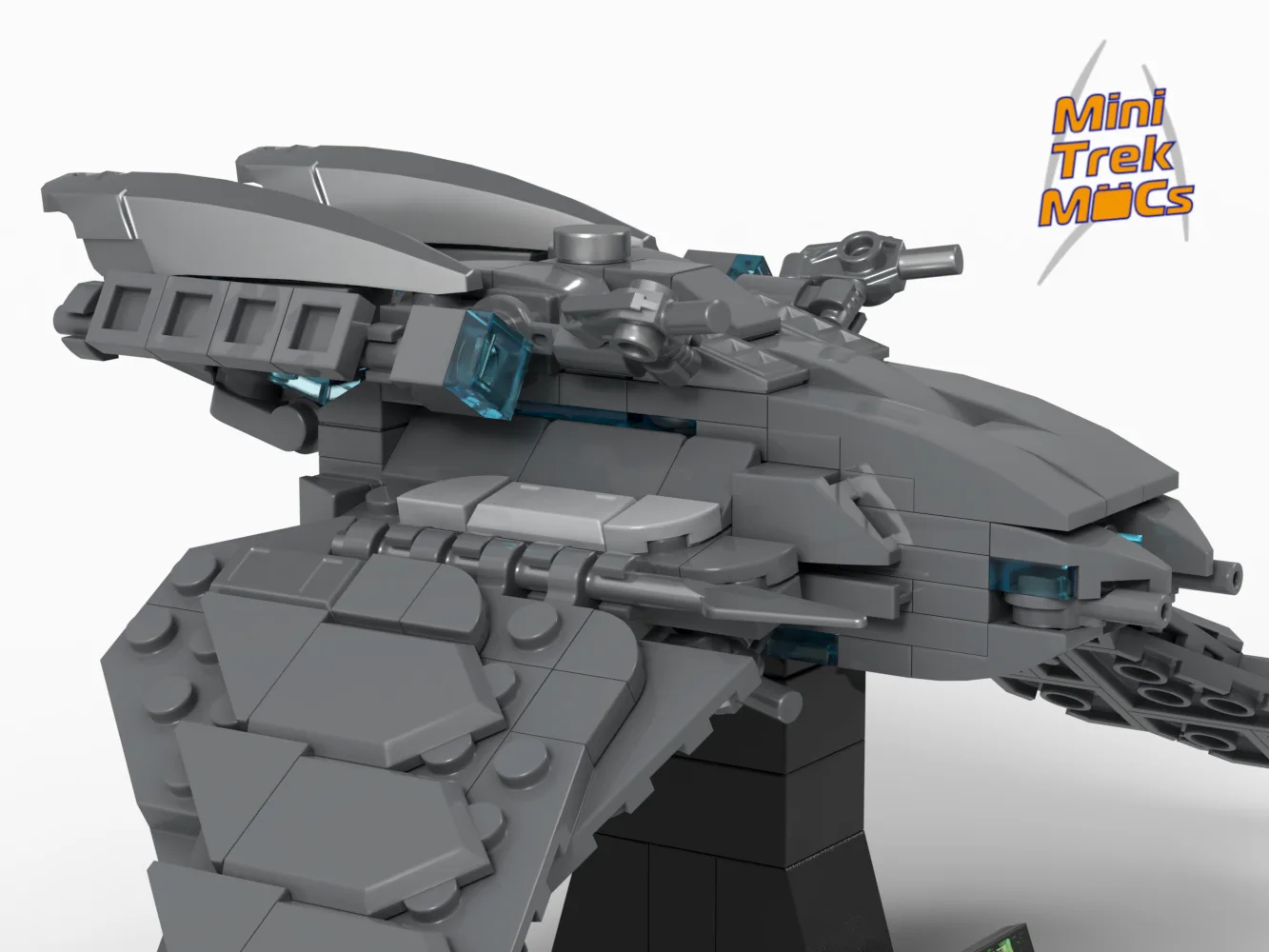
From subtle slopes to extending the silhouette of a model, the incredibly useful combo of clips and handles mean you have nearly 360 degrees of rotation to play with. You'll see one of these elements on nearly every MiniTrekMOCs model. Bars and handles can also be used to add "greebling" - a way of adding minute detail to show technological complexity to the hull of a ship.
3. Plate stacking for hull curves
Saucer sections aren't usually smooth and domed — they're stepped circles. Use 1×1 round plates, jumpers (both single and double!), and offset plates to fake the curve. The eye reads the silhouette as smooth from a reasonable distance away and maintains that essential LEGO look to each model. This is how the Enterprise-E saucer works in the MiniTrekMOCs builds.
4. Color discipline
Star Trek hulls are not a uniform color. Especially when looking at reference photos of physical models, you can see they're a careful mix of light bluish grey, sand blue, and the occasional dark bluish grey accent. Avoid the temptation to add too many bright colors for detail — restraint is what sells the scale. That being said, pops of color can dramatically improve the look of the model, like with the Enterprise-A model, whose refit added touches of dark bluish gray, sand green, and tan to improve realism. I'd encourage you to familiarize yourself with the LEGO color palette!
Common mistakes
- Too many studs facing up. Studs read as massive bumps at micro-scale. Tile wherever possible.
- Wrong nacelle proportions. Sketch the silhouette first, then build to fit the narrowest essential element of the model (usually the nacelle or bridge).
- Over-greebling the saucer. The saucer is a clean, simple shape — leave it tile-smooth and concentrate detail on the engineering hull.
- Don't forget the underside. Many fans place models on a high shelf, so don't forget to look at the model upside down to find ways to add detail and improve anti-stud exposure.
Apply it to a real build
Want to see these techniques in finished form? Every ship in the MiniTrekMOCs catalog uses at least three of the four techniques mentioned and many more!